Data Literacy Workshops at the Dayton Democracy Summit
October 27th, 2025
Code for Dayton was proud to participate in the Kettering Foundation’s inaugural Dayton Democracy Summit, held on October 27, 2025, at Sinclair College. The summit brought together community members, civic leaders, and organizations committed to strengthening democratic participation in our region.
We facilitated two hands-on workshops throughout the day, both focused on empowering participants with critical data literacy skills essential for effective civic engagement.
Morning Session: Your Story + The Numbers
Data-Driven Storytelling for Community Change
Everyone has stories about their community—housing issues, transportation problems, education concerns. But when citizens tell compelling, data-backed stories, they become more effective advocates and can better hold leaders accountable.
In this morning workshop, Dave Best and Janet Michaelis guided participants through the process of finding and weaving data into their community narratives. Working in small groups, attendees learned to:
- Break down their stories into key components
- Identify inflection points where data could increase impact
- Locate relevant, credible data sources
- Integrate numbers that make stories more compelling and actionable
The workshop emphasized that data isn’t just for experts—it’s a powerful tool that anyone can use to strengthen their voice in community decision-making.
Afternoon Session: Data BS Detector
Deconstruct Misleading Arguments with Data
In today’s information-saturated world, misleading data is everywhere—from social media to political campaigns. Our afternoon session equipped participants with a systematic approach to spot and deconstruct questionable claims.
We worked through a methodical four-step process:
- The Sniff Test - Recognizing red flags like missing context, cherry-picked time frames, or suspiciously convenient numbers
- Source Verification - Tracking down and evaluating cited studies and experts
- Seeking Alternatives - Finding other reputable sources that tell different stories
- Compare and Contrast - Systematically weighing evidence to reach informed conclusions
Using real examples from local politics and current events, participants practiced identifying misleading charts, questionable statistics, and biased presentations. Working in small groups, they developed practical skills for evaluating information critically—essential capabilities for effective democratic participation and community decision-making.
Building Informed Communities
Both workshops reflected Code for Dayton’s commitment to democratizing data skills. We believe that when community members can effectively use and critically evaluate data, they become more empowered participants in civic life. Whether telling their own stories or questioning others’ claims, these skills help level the playing field in public discourse.
We’re grateful to the Kettering Foundation for the opportunity to contribute to the Democracy Summit’s mission of strengthening democratic practices in our community. The engaged participants and thoughtful discussions throughout both sessions reminded us why this work matters.
Open-Source Workshop Materials
True to Code for Dayton’s commitment to open collaboration, all workshop materials are freely available under an MIT license. The data_literacy_workshop repository on GitHub includes:
- Story Structure Worksheet - A framework for constructing persuasive, data-backed narratives
- Data Source Guide - Guidance on locating and evaluating reliable information sources
- BS Detector Worksheet - An interactive tool for identifying misleading claims and problematic data
These resources are designed for reuse and adaptation by educators, community organizers, civic groups, and anyone interested in building data literacy skills. We encourage you to use them in your own workshops, adapt them to your community’s needs, and contribute improvements back to the repository.
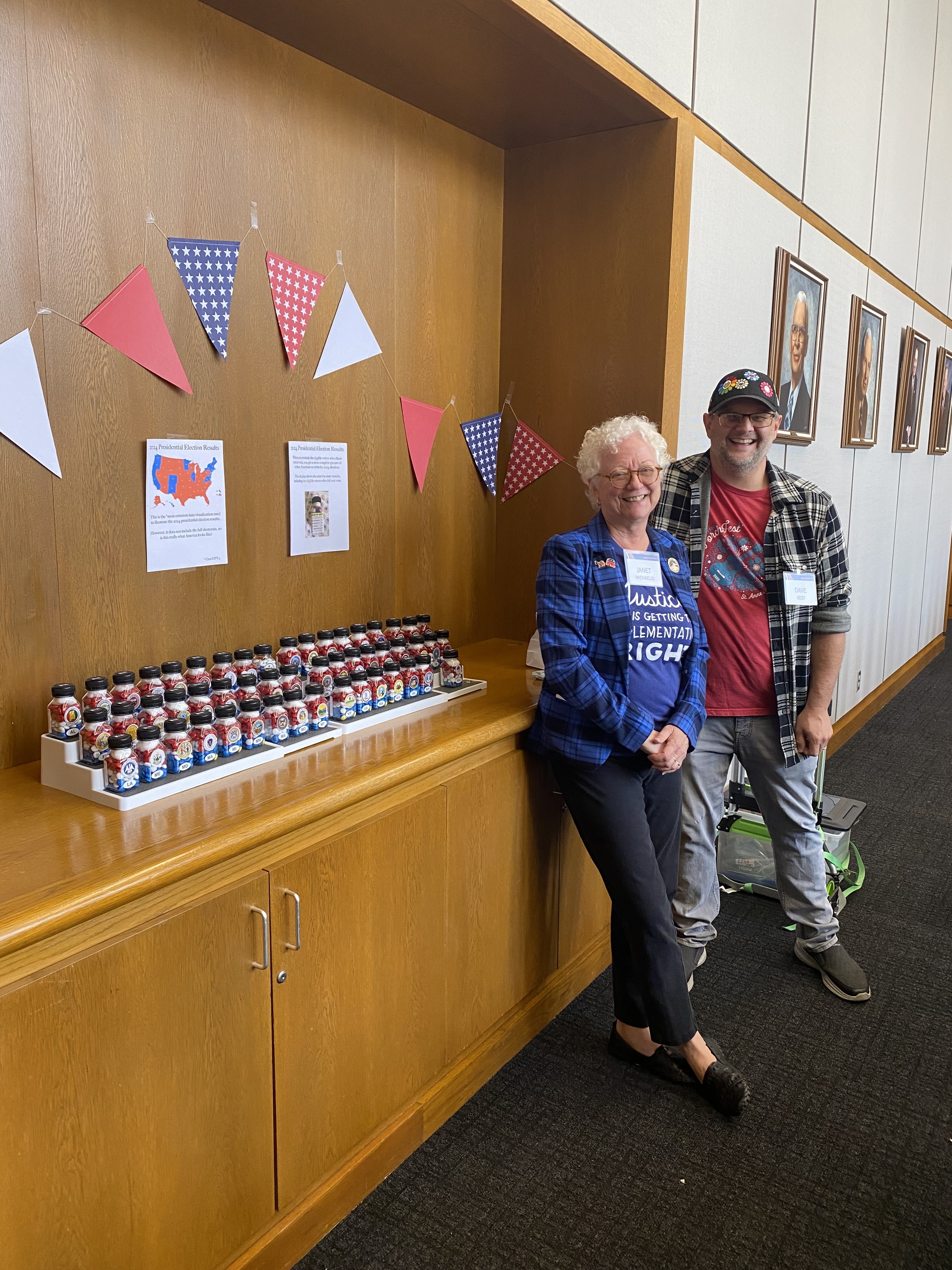
Additionally, Janet Michaelis created a video walkthrough on data visualization techniques that complements the workshop materials and provides a unique and tangible data visualization.
For more information about Code for Dayton’s data literacy initiatives, visit our website or join us at our monthly meetups.
Other Posts
-
Data Literacy Workshops at the Dayton Democracy Summit
Oct 27th, 2025 -
Presenting at Imagining Community Conference
Apr 6th, 2025 -
Plume Mapping with QGIS
May 3rd, 2023 -
Mob Programming Property Analysis
Feb 27th, 2023 -
Westwood Right and Wolf Creek Neighborhoods
Feb 11th, 2023 -
New Fiscal Host
Feb 11th, 2023 -
Preservation Dayton Conversation
Dec 11th, 2022 -
New Monthly Events
Aug 22nd, 2022 -
Restarts
Aug 20th, 2022